
Design a career that stays relevant, no matter how fast things change.
Agile Advantage combines career strategy, reflection, and AI-supported tools into a repeatable process—helping you make smart moves, regain agency, and plan your next chapter with confidence.
Why Traditional Career Advice Doesn’t Work
For a long time, career advice has rested on a quiet promise: pick a lane, get good at it, keep climbing. If you did the work, the work would take care of you. That wasn’t naïve. It was often true. Not anymore.
Roles are shifting faster than the old models can account for, and AI is one of the accelerants. The ground moves under your feet. What used to be “solid experience” can start to feel oddly fragile, like it belongs to a job that no longer exists in the same way.
The advice hasn’t caught up. Some of it still assumes stability and rewards you for staying put. The rest swings hard in the other direction and tells you to chase tools, trends, and quick reinventions. Learn this prompt. Pivot now. Brand yourself by Friday. It can sound practical, but it often turns your career into a string of reactions. You stay busy. You don’t feel clearer.
Here’s what’s missing in both versions: a way to navigate change without losing yourself in it. Careers aren’t ladders anymore, and they aren’t single identities you have to defend. They’re living systems. They need structure, feedback, and iteration. Without that, even capable people end up asking the same exhausting questions: What should I learn next? What still counts as “me”? Why do I feel behind when I’ve already done so much?
Stop Trying to Fix Your Career. Start Designing It.
Most career coaching focuses on fixing the next problem. Polish the resume. Practice the interview. Figure out what you want to be “next.” Those things can help, but they quietly assume that once you solve the immediate issue, the rest will take care of itself.
That assumption is doing a lot of damage. What breaks down is not effort or motivation. It is the lack of an underlying structure. When work keeps changing, solving one problem at a time leaves you reacting instead of designing. You stay busy. You stay competent. And you still feel uneasy about where all of this is actually going.
Career architecture starts from a different premise. A career is not a single decision or identity. It is a system that evolves over time. Like any system under pressure, it needs intentional design, feedback, and adjustment. Instead of asking, “What job should I get next?” the better question becomes, “What kind of system am I building, and will it hold up?”
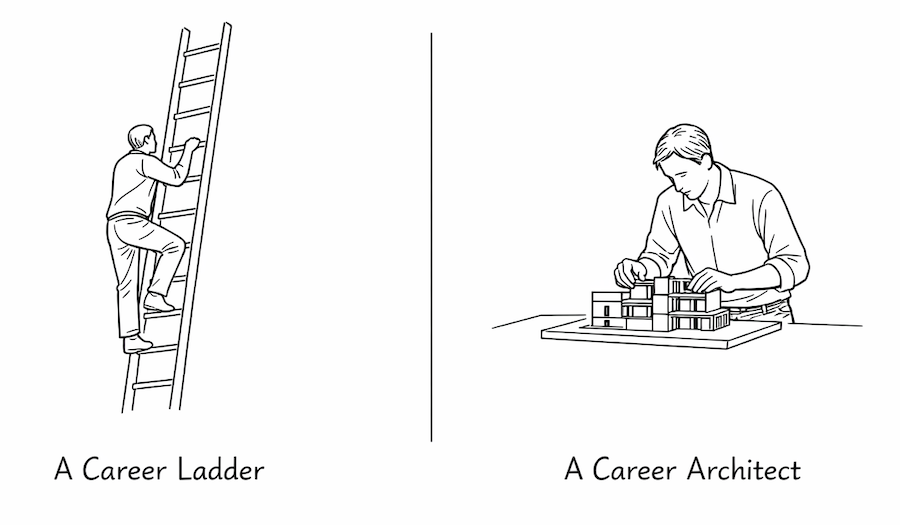
When you think architecturally, individual moves start to make more sense. Learning a new skill is not just about staying relevant; it strengthens a part of the structure. A side project is not a distraction; it is a low risk way to test a new load bearing idea. Even uncertainty becomes usable, something to work with rather than something to escape.
This is where agile thinking enters, not as project management jargon, but as a human discipline. Short cycles. Clear experiments. Regular reflection. You stop trying to predict the future and start building something that can adapt to it.
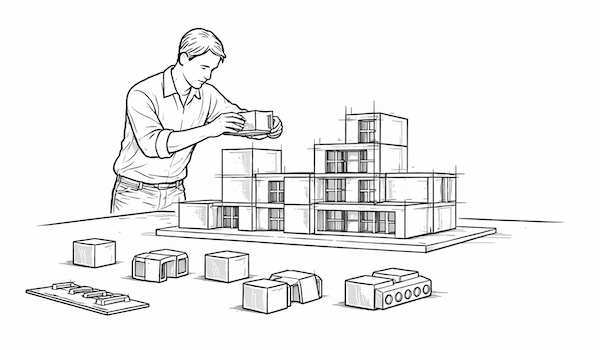
Career coaching often asks, “What do you want?” Career architecture adds, “What can you build, maintain, and evolve?” The difference is subtle, but it changes everything. One chases clarity. The other develops resilience, agency, and a quiet confidence that you are not trapped by the next change, because you know how to work with change itself.
A Practical System for Navigating Career Change
Understanding why traditional career advice breaks is useful. Seeing your career as a system instead of a series of moves is clarifying. But clarity without a way to act quickly turns into another form of stuck.
Agile Advantage exists to close that gap.
It is a working method for navigating change without betting everything on a single decision. Instead of asking you to redesign your entire life at once, it gives you a way to think, test, and adjust in small, meaningful cycles. You stop trying to predict where work is going and start building the capacity to move with it.
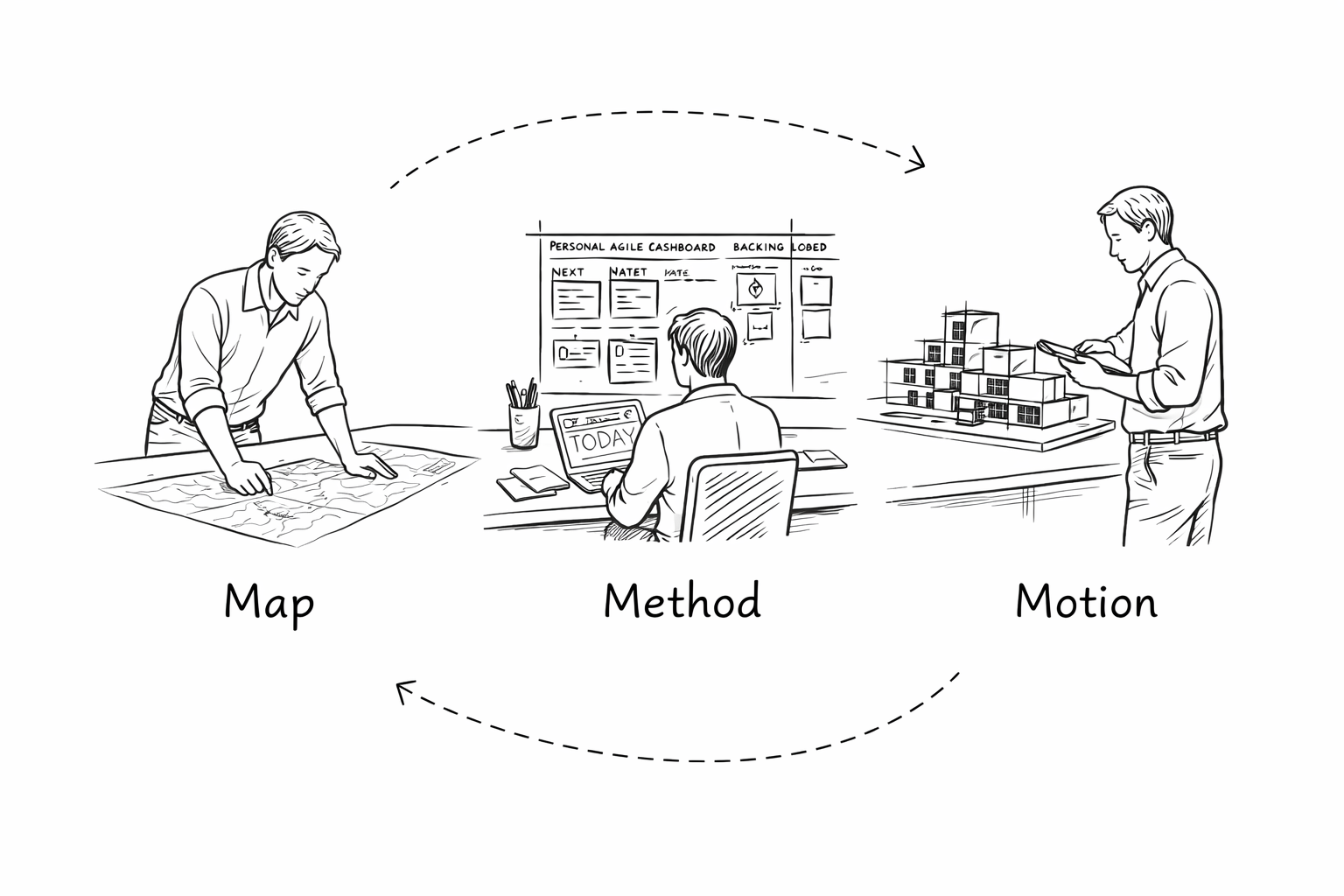
At its core, the approach follows a repeatable rhythm.
Map is about orientation before action.
You step back to understand where you are, what forces are shaping your career (including AI), and which patterns or assumptions are no longer serving you. This phase creates clarity without pressure and ensures that any next step is grounded in reality, not anxiety.
Method is where clarity becomes structure.
You design a personal, repeatable framework for managing your career—backlogs, sprints, and simple reflection rituals—so decisions aren’t made reactively. Instead of chasing advice or trends, you operate from a system you can trust and adapt over time.
Motion is focused, low-risk action.
You run short, intentional career sprints to test ideas, build momentum, and learn quickly without overcommitting. Each sprint feeds insight back into the Map, strengthening your method and making the next cycle (represented by the back arrow in the illustration) more informed and confident.
Over time, these cycles compound into a career that is more resilient, more coherent, and far less fragile than a single long-range plan.
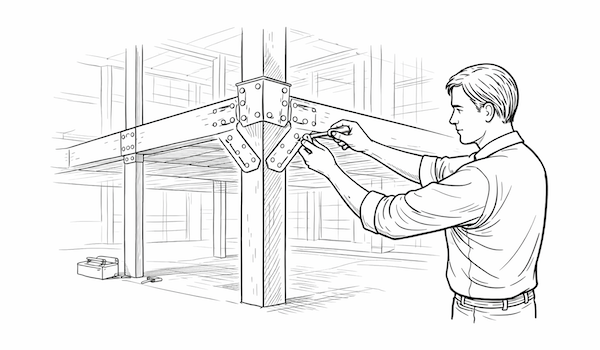
Agile Advantage is not about constant hustle or endless reinvention. It is about developing a steady practice for working with uncertainty. You gain tools, structure, and habits that let you respond thoughtfully instead of reactively. The goal is not to eliminate uncertainty, but to stop being controlled by it.